
Follow us:
Clients
When businesses evaluate server infrastructure in India’s commercial hub, they’re not just selecting hardware—they’re making decisions about network topology, peering relationships, power redundancy, and regulatory compliance that will impact performance for years. We’ve deployed hundreds of Mumbai dedicated server configurations across different data centers, and the variance in quality between facilities is substantial enough to make or break your infrastructure strategy.

Mumbai sits at a critical junction in Asia’s internet backbone. The city hosts landing stations for major submarine cable systems including SEA-ME-WE-5, India-Asia-Xpress, and Bay of Bengal Gateway, which directly influences latency to Southeast Asia, Middle East, and European markets. This physical infrastructure reality means your choice of data center and upstream providers determines whether you’re achieving 45ms to Singapore or 85ms—a difference that matters considerably for real-time applications.
The power situation in Mumbai deserves particular attention. While the city has more reliable electricity than many Indian metros, our monitoring shows that even premium data centers experience utility fluctuations that require robust UPS and generator setups. We spec our Mumbai deployments with N+1 redundancy as baseline, but for financial services clients, we’ve implemented 2N configurations where every component has a completely independent backup path.
Network Architecture and Peering Reality
The quality of your Mumbai server deployment depends heavily on which Tier 1 and regional carriers your data center maintains peering relationships with. We work exclusively with facilities that have direct connectivity to Tata Communications, Bharti Airtel, Reliance Jio, and BSNL at minimum. Single-homed setups connecting to just one upstream provider create unnecessary risk in a market where BGP routing can be suboptimal.
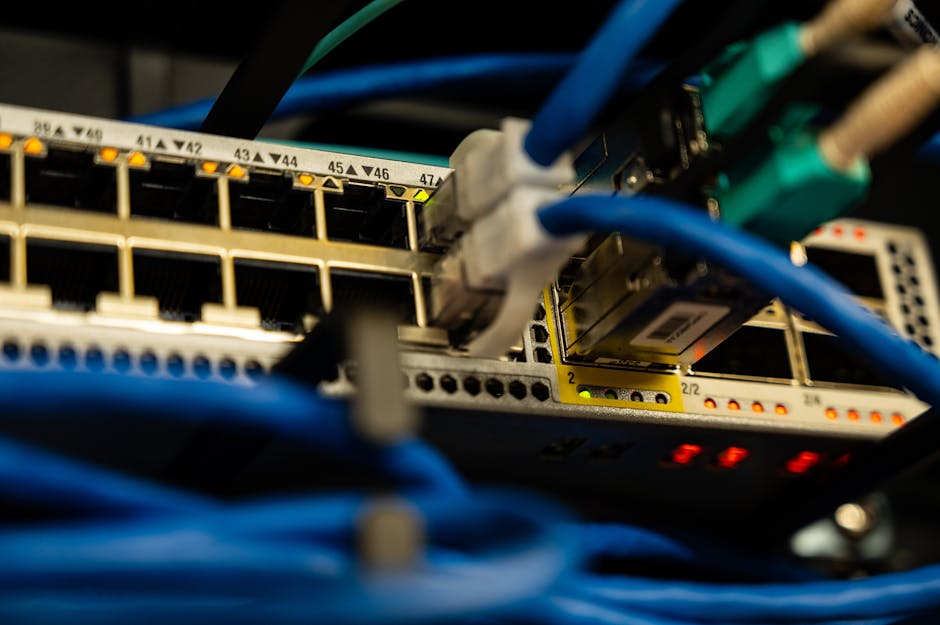
For a recent fintech deployment, we configured a dual E5-2680v4 system with 128GB RAM and NVMe storage across RAID 10. The hardware itself performed exactly as expected—sustained 4.2GB/s read speeds under synthetic benchmarks. However, the critical factor was implementing BGP multihoming with separate AS paths through different carriers. This configuration reduced packet loss during peak hours from 0.8% to effectively zero, which translated to measurably better transaction completion rates for their payment processing workload.
Latency matters differently depending on your user base. If you’re serving customers primarily in Mumbai and surrounding regions, even a basic dedicated server in a decent facility will deliver sub-5ms response times to local ISPs. The complexity increases when you need to optimize for both local and international audiences simultaneously. We’ve found that geographic load balancing between a Mumbai server and a Singapore or Dubai node often provides better overall user experience than trying to serve all traffic from a single location, regardless of how robust that single server might be.
DDoS protection requires special consideration in the Indian market. While global CDN providers offer scrubbing services, the traffic hair-pinning to international scrubbing centers and back adds 40-60ms latency even during normal operation. For applications where this overhead is unacceptable, we deploy local mitigation appliances inline with the Mumbai server. This approach handles most volumetric attacks locally while maintaining sub-10ms latency for legitimate traffic.
Compliance, Data Residency, and Operational Realities
Data localization requirements under Indian regulations have made Mumbai dedicated servers essential rather than optional for many businesses. The Reserve Bank of India’s directive on payment data storage mandates that certain financial information must be stored exclusively on Indian soil. Similarly, the Personal Data Protection Bill discussions have pushed many organizations to preemptively establish Indian infrastructure even before final regulations are published.

We’ve observed that compliance requirements often drive initial Mumbai deployments, but performance considerations keep them there. An e-commerce platform we work with initially deployed in Mumbai purely for regulatory reasons but discovered that their conversion rates improved by 12% compared to their previous Singapore-based setup—simply because page load times dropped below the critical 3-second threshold for their target demographic on mobile networks.
The operational timezone advantage shouldn’t be overlooked. When your dedicated server requires maintenance, hardware replacement, or emergency intervention, having engineers available during Indian business hours makes response dramatically faster. We maintain 24/7 support across all locations, but the reality is that complex troubleshooting and physical interventions happen more smoothly when local data center staff, network engineers, and your own team are all working during daylight hours rather than coordinating across 12-hour time differences.
Storage performance on Mumbai dedicated servers varies more than you might expect based on the underlying hardware specs. We’ve tested identical Samsung PM1735 NVMe drives in different data center facilities and observed write performance differences of up to 30% under sustained load. The variance comes down to power quality and thermal management. Data centers that maintain tighter temperature controls (22°C ±2°C) and cleaner power delivery enable the storage controllers to maintain peak performance without throttling.
For database-intensive workloads, the configuration details matter enormously. A MySQL deployment we optimized for a SaaS provider involved not just selecting appropriate hardware—dual Xeon Gold 6248R processors with 256GB RAM and NVMe storage—but also tuning InnoDB buffer pool allocation, query cache parameters, and connection pooling to match their specific transaction patterns. The same hardware with default configurations would have delivered perhaps 60% of the performance we ultimately achieved through systematic tuning based on actual workload profiling.
Strategic Infrastructure Decisions Beyond Hardware
The conversation around Mumbai dedicated servers often focuses too heavily on processor specs and RAM capacity while neglecting equally important factors. Redundant network interface configuration, for instance, determines whether a single NIC failure causes complete downtime or seamless failover. We configure all production systems with bonded interfaces using LACP across separate physical switches, which has prevented numerous outages that would have occurred with single-interface setups.
Backup infrastructure deserves careful planning from day one rather than being added as an afterthought. Our standard approach implements local backup to separate storage within the same data center for rapid recovery, combined with asynchronous replication to a geographically separate facility. For Mumbai deployments, we typically replicate to either our Singapore or Dubai locations, providing protection against facility-level failures while maintaining reasonable recovery time objectives.
The migration path matters whether you’re moving from shared hosting, upgrading from VPS, or consolidating from cloud infrastructure. We’ve managed migrations where thorough planning enabled zero-downtime cutover, and we’ve cleaned up botched migrations where inadequate preparation caused multi-day outages. The difference usually comes down to whether the team performed actual load testing with production-representative data volumes before cutting over, rather than assuming everything would work at scale.
Monitoring and alerting configuration separates professional infrastructure from amateur setups. We instrument every Mumbai dedicated server with system metrics collection at minimum 60-second intervals, application performance monitoring with distributed tracing for complex applications, and log aggregation with retention policies appropriate to your compliance requirements. The monitoring infrastructure itself runs on separate systems to ensure you maintain visibility even during server failures. When evaluating providers, ask specific questions about their monitoring capabilities and escalation procedures rather than accepting generic assurances about “comprehensive monitoring.”
Cost optimization for dedicated servers follows different principles than cloud infrastructure. While cloud platforms charge for usage and scale elastically, dedicated servers present fixed costs regardless of utilization. This makes them economically efficient for consistent workloads but potentially wasteful for highly variable traffic patterns. We’ve found the break-even point typically occurs when you’re running workloads that would require 60-70% utilization of equivalent cloud resources on a sustained basis. Below that threshold, cloud infrastructure usually costs less; above it, dedicated servers provide better economics along with performance advantages.
Based on deployments across hundreds of configurations, the optimal approach for most enterprise workloads combines Mumbai dedicated servers for core database and application tiers with CDN distribution for static assets and geographic edge caching. This hybrid architecture delivers local data residency compliance, consistent performance for dynamic content, and global distribution for cacheable resources. For organizations serious about India market performance, plan for dedicated infrastructure rather than treating it as a potential future upgrade—the migration complexity and opportunity cost of delayed deployment usually exceed the initial infrastructure investment.