
Follow us:
Clients
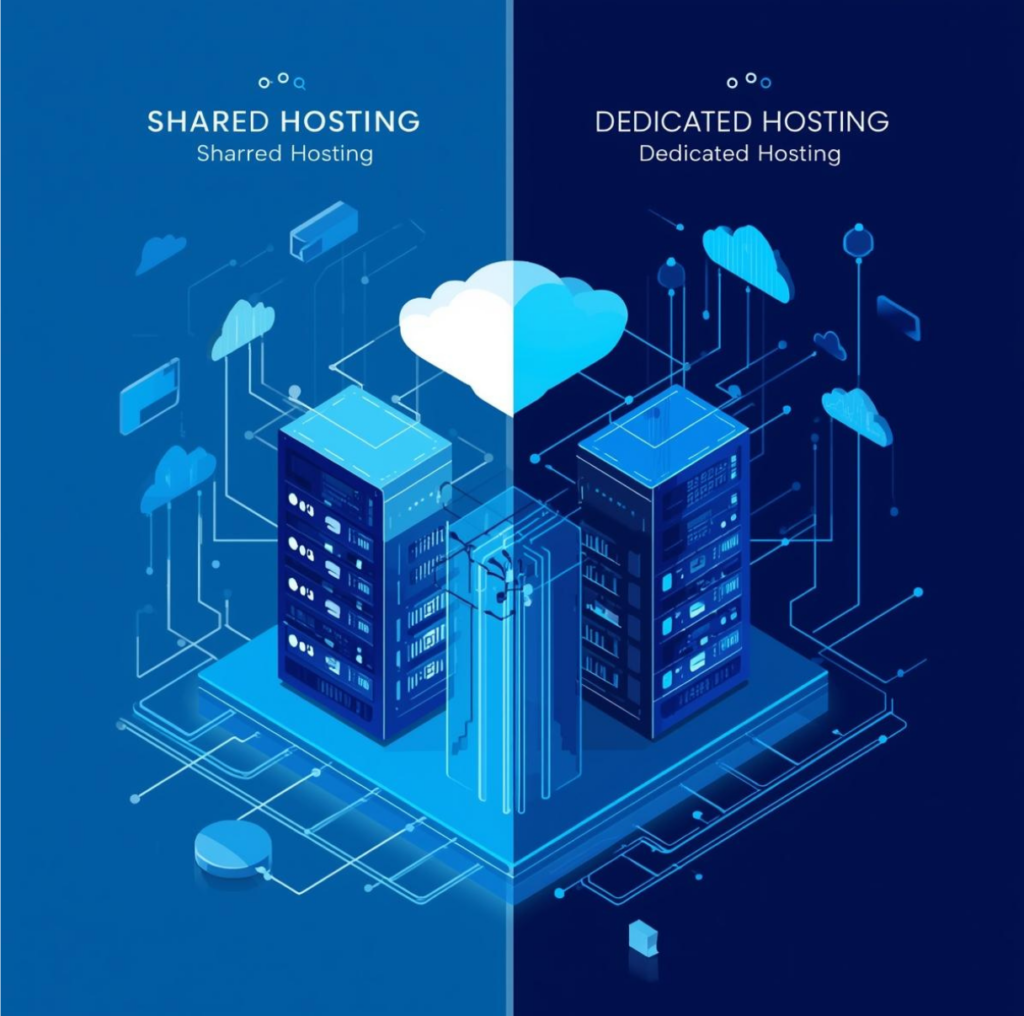
Choosing the right hosting environment is one of the most important decisions for your website’s performance, security, and scalability. Two of the most common options are shared hosting and dedicated hosting, but understanding the difference between them, and knowing which one fits your needs, can be confusing.
In this guide, we’ll break down shared hosting vs dedicated server, explain how each works, and help you determine which option is right for your website.
What Is Shared Hosting?
Shared hosting means your website is hosted on a server that is shared with multiple other websites. All sites use the same pool of server resources, including CPU, memory, and storage.
Key Characteristics of Shared Hosting
● Multiple websites on one server
● Lower cost
● Minimal technical management required
● Suitable for small or low-traffic websites
Pros of Shared Hosting
● Cost-effective and beginner-friendly
● Easy setup and maintenance
● Ideal for blogs, personal sites, and small businesses
Cons of Shared Hosting
● Limited performance during traffic spikes
● Fewer customization options
● Shared resources may impact speed and reliability

What Is Dedicated Hosting?
Dedicated hosting means your website has exclusive access to an entire server. No resources are shared, giving you full control over performance, security, and configuration.
Key Characteristics of Dedicated Hosting
● One website per server
● Maximum performance and reliability
● Advanced security capabilities
● Full control over server settings
Pros of Dedicated Hosting
● Consistent high performance
● Stronger security and isolation
● Custom server configurations
● Ideal for high-traffic or mission-critical websites
Cons of Dedicated Hosting
● Higher cost
● Requires technical expertise or managed services
● More responsibility for maintenance and updates
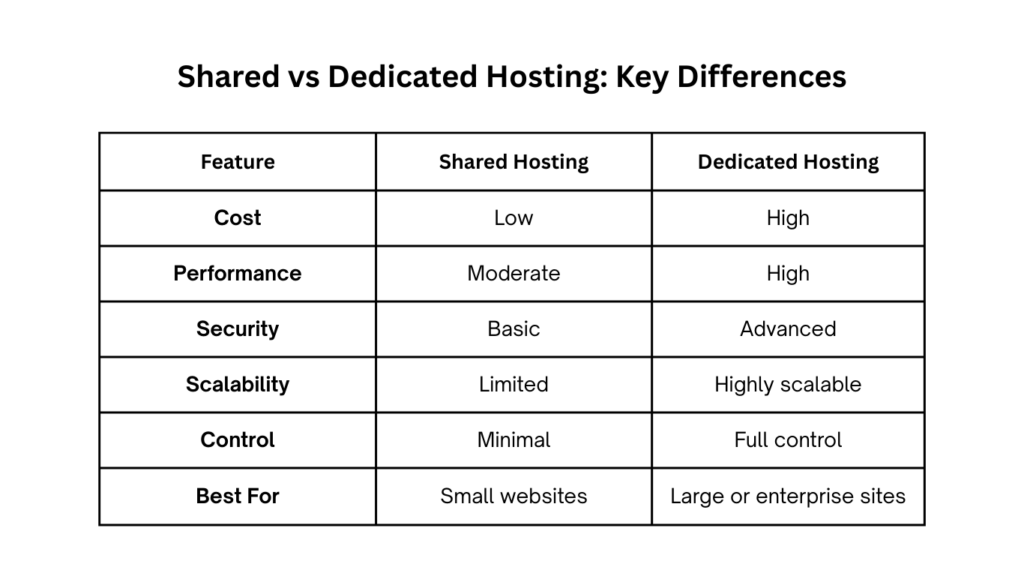
Understanding shared vs dedicated hosting comes down to balancing budget, traffic, and technical requirements.
Dedicated Server vs Shared Hosting: Which Should You Choose?
Choosing between dedicated server vs shared hosting depends on your website’s goals.
Choose Shared Hosting If:
● You’re launching a new website
● Your traffic is low to moderate
● You want an affordable hosting solution
● You don’t need advanced server customization
Choose Dedicated Hosting If:
● Your site receives high traffic
● You handle sensitive data
● Performance and uptime are critical
● You need full control over server resources
As your website grows, many businesses start with shared hosting and later upgrade to dedicated hosting for better performance and scalability.
Making the Best Choice Between Shared and Dedicated Hosting
There is no one-size-fits-all answer when comparing shared hosting vs dedicated hosting. Shared hosting offers simplicity and affordability, while dedicated hosting delivers power, control, and reliability.
The right choice depends on your website’s size, traffic, security needs, and long-term growth plans. By understanding the differences, you can select a hosting solution that supports your goals today and scales with you tomorrow.
If you’re deciding between shared hosting and dedicated hosting, having the right guidance can help you avoid performance issues and unnecessary costs. Review your website’s traffic, security needs, and growth plans, then choose a hosting solution that supports both your current requirements and future expansion. If you need help selecting the right environment, speaking with our sales team at Softsys Hosting can help you make a well-informed decision.