
Follow us:
Clients

Choosing a dedicated server is an important step for businesses that need stronger performance, more control, and greater reliability. But once you decide that a dedicated environment is the right fit, another question quickly follows: should you choose a managed dedicated server or go with an unmanaged option?
At first glance, both solutions may seem similar because they provide access to dedicated infrastructure. However, the experience of managing them is very different. The right choice depends on your technical knowledge, internal resources, operational priorities, and long-term business goals.
Understanding the differences between managed and unmanaged hosting can help you avoid unnecessary costs, technical frustration, or unexpected downtime.
What Is a Dedicated Server?
Before comparing options, it helps to understand the foundation.
A dedicated server is a physical machine used exclusively by one customer. Unlike shared hosting or VPS environments, all server resources belong to your organization. This means better performance, stronger security, and greater customization.
Think of it like owning a private office building instead of renting a desk in a shared workspace. You decide how everything is configured, what security measures are in place, and how resources are used.
But owning the building also raises another question:
Who is responsible for maintaining it?
That is exactly where the difference between managed and unmanaged servers begins.
What Is a Managed Dedicated Server?
A managed dedicated server includes ongoing support and administration from the hosting provider. Instead of handling technical maintenance yourself, the provider helps manage the server environment.
This typically includes:
● Operating system updates
● Security patches
● Monitoring and performance optimization
● Server troubleshooting
● Backup management
● Technical support assistance
For businesses without a dedicated IT department, this approach removes much of the operational burden.
A simple analogy is owning a car with a full maintenance plan. You still drive the vehicle, but professionals handle inspections, repairs, and maintenance to keep everything running properly.
This makes managed hosting especially attractive for businesses that prioritize uptime and reliability but do not want to manage server complexity internally.
What Are Unmanaged Dedicated Servers?
Unmanaged dedicated servers provide the infrastructure only. The hosting provider supplies the physical server and network connectivity, but all administration becomes your responsibility.
With unmanaged hosting, you are responsible for:
● Installing and configuring software
● Security hardening
● Monitoring performance
● Applying updates and patches
● Troubleshooting server issues
● Managing backups
This option offers greater control but requires strong technical expertise.
Using the same analogy, unmanaged hosting is like owning a car and being responsible for every repair, maintenance task, and diagnostic issue yourself.
For experienced developers or organizations with in-house system administrators, this level of control may be beneficial.
However, for teams without technical resources, unmanaged servers can become overwhelming quickly.
Managed vs. Unmanaged Dedicated Servers: The Main Differences
Here is a side-by-side comparison to make the differences easier to understand.
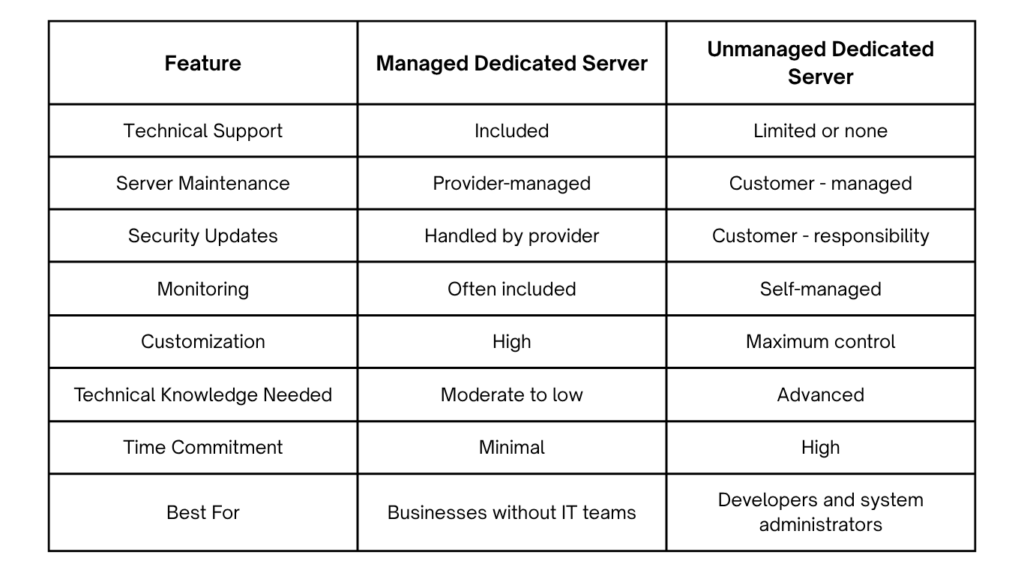
This comparison highlights one important reality: the best option depends less on the server itself and more on your ability to manage it effectively.
The Pros and Cons of Managed Dedicated Servers
Advantages of Managed Dedicated Servers
One of the biggest advantages is reduced operational stress. Instead of spending time resolving technical issues, your team can focus on business growth.
Managed hosting also helps improve security because updates and patches are handled proactively.
Performance optimization is another benefit. Providers often monitor servers continuously and address issues before they affect uptime.
For growing businesses, reliability becomes extremely valuable because downtime can directly impact revenue and customer trust.
Potential Drawbacks
Managed servers generally cost more because support and maintenance are included.
There may also be some limitations in highly customized configurations depending on the provider’s management policies.
Still, many businesses view the additional cost as worthwhile when compared to the expense of internal IT staffing or downtime.
The Pros and Cons of Unmanaged Dedicated Servers

Advantages of Unmanaged Dedicated Servers
The main benefit is control. You can configure every aspect of the server environment exactly how you want.
For developers or technical teams, unmanaged hosting offers maximum flexibility.
Costs may also be lower because management services are not included.
Potential Drawbacks
The biggest challenge is responsibility.
If something breaks, security vulnerabilities appear, or performance drops, your team must resolve it.
Without technical expertise, small issues can become major problems quickly.
For many organizations, the hidden cost of unmanaged hosting comes through lost time and operational risk.
Which Option Is Right for Your Business?
Choosing between managed and unmanaged hosting comes down to one key question:
Do you want to manage infrastructure, or focus on running your business?
If your team lacks dedicated technical staff or prefers predictable operations, a managed dedicated server solution may be the better fit.
On the other hand, if you have experienced system administrators and need complete technical freedom, unmanaged dedicated servers may offer the flexibility you need.
A good rule of thumb is this:
If server management feels like a distraction from your core business goals, managed hosting is usually the smarter investment.
Making the Right Hosting Decision
There is no universal answer when comparing managed and unmanaged dedicated servers. Both provide the power and performance of dedicated infrastructure, but the experience of operating them is very different.
Managed hosting offers convenience, support, and operational peace of mind. Unmanaged hosting offers flexibility and full technical control.
The right decision comes down to your internal expertise, available time, and business priorities.
Ready to Find the Right Dedicated Server Solution?
Choosing the right hosting environment should support your business, not slow it down. Whether you need hands-on control or expert assistance managing your infrastructure, selecting the right dedicated server model can improve performance, security, and reliability.
If you are exploring managed server options, now is a good time to evaluate what level of support best aligns with your business goals.
The right hosting strategy can help your team spend less time managing servers and more time focusing on growth.